
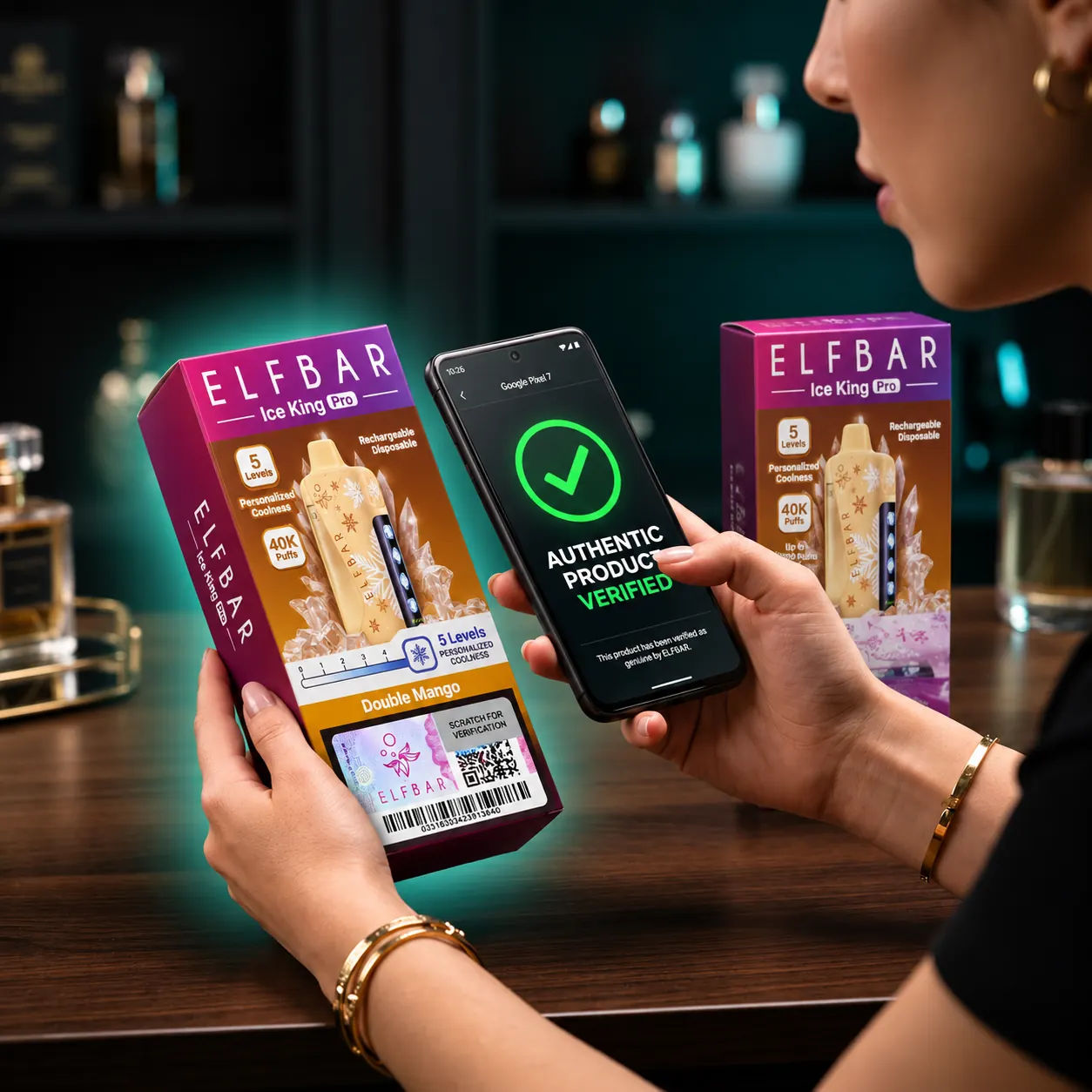
The growing international vape market has created opportunities for manufacturers to introduce increasingly sophisticated vaping devices, but it has also created an opportunity for counterfeit products to enter retail supply chains. Products carrying familiar brand names, logos and packaging designs can sometimes be difficult to distinguish from genuine merchandise, particularly when counterfeiters reproduce the appearance of established manufacturers.
In Kenya, where consumers encounter vaping products from international brands such as Elf Bar, Al Fakher, AAOK, Lost Mary, Vapengin, Voopoo and other manufacturers, understanding how product authentication works is an important part of making informed purchasing decisions.
Counterfeit vape products are not simply imitation versions of popular devices. They may contain unverified ingredients, poorly manufactured electronic components, unreliable batteries and inaccurate product specifications. Their appearance can closely resemble genuine products, making visual inspection alone insufficient.
Fortunately, several established manufacturers have introduced product authentication systems that allow consumers to check security codes and QR labels against official databases.
This guide examines how counterfeit vapes are produced, the warning signs to look for, how manufacturer verification systems work and what consumers in Kenya should understand before trusting a product's authenticity.
What Are Counterfeit Vapes?
Counterfeit vapes are products manufactured, distributed or marketed using another company's brand identity, trademarks, packaging or product designs without authorization.
Unlike legitimate products manufactured under a recognized brand, counterfeit devices do not follow the original manufacturer's production specifications, quality controls or testing procedures.
Some counterfeit products reproduce the external appearance of established vape brands almost exactly. Others use slightly modified logos, different packaging arrangements or misleading product descriptions to create the impression that they are genuine.
Counterfeits are common among several types of vaping products, including:
- Disposable vape devices.
- Rechargeable disposable vapes.
- Refillable pod systems.
- Vape starter kits.
- E-liquids and nicotine salts.
- Replacement pods and accessories.
It is important to distinguish counterfeit products from legitimate products that have simply been imported through different distribution channels. An unfamiliar retailer or packaging variation does not automatically establish that a product is fake. Authentication should rely on manufacturer verification and other supporting evidence.
Examine the Packaging Before Anything Else
Packaging is one of the first places to look when assessing a product's authenticity.
Established vape manufacturers generally maintain consistent branding, packaging layouts, product information and security features across their product ranges.
Counterfeit manufacturers sometimes reproduce the overall design but overlook smaller details that can reveal inconsistencies.
Pay attention to the following:
Printing quality: Look for unusually blurred graphics, inconsistent lettering, poorly aligned text or printing that differs noticeably from the manufacturer's official product images.
Spelling and grammatical errors: Misspelled brand names, incorrect product descriptions and unusual wording can indicate unauthorized reproduction.
Product information: Compare the model name, flavour, advertised capacity and technical specifications against information published by the manufacturer.
Security labels: Check whether the package includes the manufacturer's expected authentication label, holographic feature or security code.
Packaging condition: Be cautious of damaged seals, previously opened packaging, missing labels or signs that security stickers have been replaced.
However, packaging should only be treated as an initial inspection. Counterfeiters can reproduce packaging designs, so a convincing box is not proof of authenticity.
Understand How QR Code Authentication Works
One of the most useful developments in counterfeit prevention is the introduction of manufacturer-controlled QR authentication systems.
Several international vape manufacturers use unique security codes or QR labels that direct consumers to official verification platforms.
The general process works as follows:
- Locate the authentication label on the product packaging.
- Identify the QR code or scratch-off security section.
- Scan the QR code using a smartphone.
- Check the website address that opens.
- Confirm that the destination belongs to the manufacturer's official domain.
- Follow the manufacturer's verification instructions.
- Review the authentication result before drawing a conclusion.
For example, ELFBAR provides an official product authentication service where consumers can scan the QR code or enter the security code printed on the packaging.
LOST MARY also provides an authentication platform that allows consumers to verify products using an 18-digit security code or QR code.
These systems are useful because they allow verification against manufacturer-controlled records rather than relying exclusively on the appearance of a product.
Why You Should Never Trust Every QR Code
An important detail that consumers sometimes overlook is that QR codes can be copied.
A counterfeit package may contain a QR code that redirects to a website designed to resemble the manufacturer's official verification platform.
Others may use copied codes taken from genuine products.
For this reason, scanning a QR code is not enough. Always examine the destination website carefully.
Check the actual domain name rather than relying on the appearance of the webpage. A website that uses a manufacturer's logo and colours is not necessarily an official manufacturer website.
If the destination looks suspicious, close the page and manually navigate to the manufacturer's official website to locate its verification service.
What Does It Mean When a Security Code Has Already Been Verified?
Security codes are designed to help manufacturers distinguish genuine products from unauthorized copies.
However, verification results require careful interpretation.
Some manufacturers track how frequently a particular security code has been checked. Depending on the manufacturer's system, repeated verification attempts may trigger warnings or indicate that a code has previously been used.
This is particularly relevant because counterfeiters sometimes copy authentication labels from genuine packaging and reproduce them on multiple counterfeit products.
Consider the following situations:
First-time successful verification: This is encouraging evidence that the code is recognized by the manufacturer's system, but it should not be treated as absolute proof that every aspect of the product is genuine.
Repeated verification warning: A code that has been checked multiple times may require additional investigation. It could indicate a copied code, although legitimate repeat checks or changes in the verification system may also explain the result.
Invalid security code: The code may have been entered incorrectly, may belong to a different product version or may not be recognized by the manufacturer.
Unexpected verification website: If scanning directs you to an unfamiliar domain, do not enter personal information or assume that the product is genuine.
When a result is unclear, contact the manufacturer using its official support channels.
Check the Product Against the Manufacturer's Official Specifications
Another useful authentication step is comparing the physical product with information published by the manufacturer.
Counterfeit products may carry specifications that differ from those of the genuine model.
For example, examine:
- The exact product model and series.
- Advertised e-liquid capacity.
- Battery capacity.
- Display arrangement.
- Charging port configuration.
- Coil technology.
- Physical dimensions and design.
- Available product variants.
These details should be checked against the manufacturer's official website rather than relying entirely on retailer descriptions or social media advertisements.
A discrepancy does not automatically establish counterfeiting because manufacturers sometimes update products, packaging and regional versions. Nevertheless, unexplained differences deserve further investigation.
Be Careful With Unusually Low Prices
Price is another factor worth considering when evaluating product authenticity.
Counterfeit sellers may use unusually low prices to attract customers who are unfamiliar with normal retail pricing.
However, a discounted product is not automatically counterfeit. Legitimate retailers can offer promotions, clearance sales and special pricing.
The important distinction is whether the price is supported by a credible supply chain and verifiable product information.
Before making a purchasing decision, consider:
- Whether the seller has an identifiable business.
- Whether the seller provides clear product information.
- Whether the product has intact packaging and authentication features.
- Whether the manufacturer can confirm the product's authenticity.
- Whether the seller can provide a valid purchase record.
In Kenya, the Anti-Counterfeit Authority identifies price, place, packaging and product characteristics as important considerations when identifying potentially counterfeit goods.
These considerations are useful beyond the vaping industry and apply to many internationally branded consumer products.
Why Counterfeit Vape Batteries and E-Liquids Deserve Particular Attention
The concerns surrounding counterfeit vaping products extend beyond branding and product appearance.
Electronic vaping devices contain components that must work together within specific manufacturing tolerances.
A counterfeit device may use unverified battery cells, inconsistent electronic components or poorly assembled charging systems.
Potential concerns include:
Battery quality: Substandard or damaged lithium-ion batteries may overheat, malfunction or become unstable during charging.
Charging components: Poorly manufactured charging circuits can create additional electrical and thermal risks.
E-liquid composition: Unverified liquids may contain ingredients or concentrations that do not match the information displayed on the packaging.
Coil and heating components: Inconsistent manufacturing can affect how a device heats and delivers its contents.
Product labelling: Counterfeit products may display inaccurate nicotine concentrations, e-liquid quantities or other technical information.
A successful authenticity check does not independently establish that a product is risk-free. It only provides evidence about whether the product is recognized by the manufacturer's authentication system.
Note: Nicotine is addictive and vaping products are not risk-free.
What Should You Do If You Suspect Your Vape Is Counterfeit?
If a product fails manufacturer verification or displays several concerning inconsistencies, avoid using it while the issue is investigated.
The following steps can help:
- Stop using the product if its authenticity is in doubt.
- Keep the original packaging and security label.
- Photograph the product, batch information and verification code.
- Save the purchase receipt or transaction record.
- Contact the manufacturer through its official website.
- Contact the seller and request clarification.
- Report suspected counterfeit goods to the relevant authorities where appropriate.
Do not attempt to open, dismantle or modify a suspicious electronic device to investigate its internal components.
If a battery becomes unusually hot, swells, leaks or shows signs of damage, do not continue charging or using the device. Follow appropriate battery safety guidance.
A Practical Checklist for Verifying Vape Authenticity
Before accepting a product as genuine, consider the following checks:
Packaging
- Is the brand name correctly displayed?
- Is the printing clear and consistent?
- Are product details complete?
- Are security labels present where expected?
Authentication
- Does the manufacturer provide an official verification system?
- Does the QR code lead to the correct manufacturer domain?
- Is the security code recognized?
- Are there unexpected warnings or repeated verification results?
Product information
- Does the model match the manufacturer's specifications?
- Are the technical details consistent?
- Are there unexplained differences in appearance or labelling?
Seller information
- Is the business identifiable?
- Is there a clear purchase record?
- Can the seller explain the product's source?
- Is the pricing unusually low without a credible explanation?
No individual check guarantees authenticity. The strongest approach combines manufacturer verification, product inspection and credible seller information.
Where to Buy Authentic and Verifiable Vaping Products in Kenya
Knowing how to identify counterfeit vaping products is important, but knowing where to get genuine products that are verifiable is more valuable. Consumers should consider retailers that provide clear product information, credible sourcing details and access to manufacturer authentication resources.
Dally Vapes Nairobi features a range of internationally recognized vape brands, including Elf Bar, Lost Mary, Al Fakher, AAOK, Vapengin, Voopoo, Vaporesso, SMOK, Uwell, Solo Bar and more.
Its catalogue covers disposable and rechargeable devices, shisha-style vapes, refillable pod systems, starter kits, e-liquids and accessories.
Authentic Featured Brands and Product Models at Dally Vapes Nairobi
Some of the models featured in the Dally Vapes Nairobi catalogue include:
Elf Bar: Ice King Pro 40,000 Puffs, Trio Sweet & Sour 40,000 Puffs, Ice King 30,000 Puffs, Raya D3 25,000 Puffs, BC 10,000 Puffs and E-Shisha 16,000 Puffs.
Al Fakher and AAOK Shisha Vapes: Al Fakher Crown Bar Mega Max 40,000 Puffs, AAOK 80K and AAOK 100K Shisha Vapes.
Choosing a Retailer That Values Product Authenticity
When evaluating a vape retailer, consumers should look beyond brand recognition and product appearance. Product sourcing information, supplier traceability, packaging integrity and access to manufacturer verification systems are important considerations.
Dally Vapes Nairobi provides an online catalogue featuring international vape brands and different product categories. Consumers can explore individual models, examine advertised specifications and consult the relevant manufacturer authentication resources discussed earlier in this guide.
For additional information about product availability, specifications and sourcing, visit Dally Vapes Nairobi.
Ultimately, assessing product authenticity requires more than trusting a familiar brand name or attractive packaging. Manufacturer verification, careful product inspection and credible purchasing documentation provide a more reliable basis for evaluating product legitimacy.